
Characterized Peritoneal Fibrosis Models for Renal Research
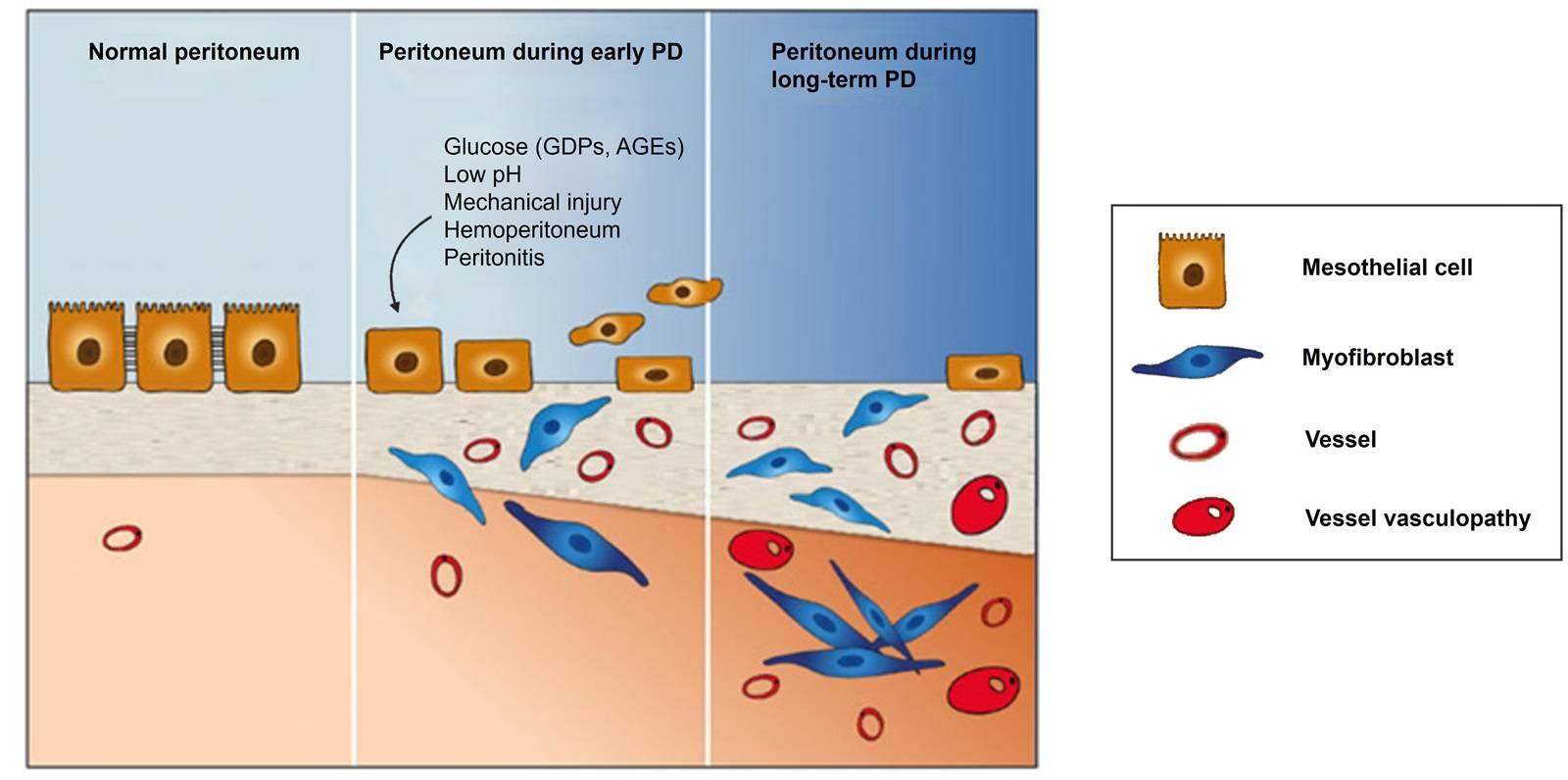
Peritoneal dialysis (PD) is one of the most commonly used dialysis methods, playing a vital role in maintaining the quality of life of patients with end-stage renal disease. However, long-term PD treatment can adversely affect the structure and function of peritoneal tissue. This can lead to failure of peritoneal ultrafiltration, resulting in dialysis failure and necessitating discontinuation of PD treatment. Although mesothelial-mesenchymal transition of peritoneal mesothelial cells is a key process in peritoneal fibrosis, and biocompatible peritoneal dialysis solutions (e.g. glucose, glucose degradation products and advanced glycation end products) can alter mesothelial cell function and proliferation, the underlying mechanisms are unclear.
To prevent these adverse effects, it is crucial to address key issues such as improving ultrafiltration efficiency, protecting peritoneal function and extending dialysis duration. In basic research on peritoneal dialysis, establishing a suitable experimental model is crucial to ensuring experiments progress smoothly. An effective model of peritoneal dialysis should simulate the human process as accurately as possible and help researchers to understand the progression and pathogenesis of complications associated with treatment.
In recent years, various animal models for peritoneal dialysis have been used. These models are used to investigate the physiological mechanisms of peritoneal transport and to test the biocompatibility of dialysate. The majority of these studies have been conducted on non-uremic animals. However, with the advent of transgenic mice and cellular models, researchers can now investigate other relevant pathways. Furthermore, applying multiplex assays and DNA/RNA microarray technologies to these models enables the assessment of interactions between various physiological and pathophysiological pathways within the peritoneal cavity and systemic parameters.
In response to the urgent need of researchers for preclinical assessment tools, Creative Diagnostics now offers peritoneal fibrosis animal models developed using industry-standard rodent hosts, including SD rats and KM mice, to support the studies of anti-fibrosis therapies in PD. These animal models can help researchers to evaluate the efficacy and safety of potential anti-fibrotic therapies, providing a deeper understanding of their mechanisms of action and therapeutic potential.
The model is established within a predictable four-week timeframe using two precise induction methods tailored to specific study designs: daily intraperitoneal injection of glucose-containing peritoneal dialysis fluid (PDF), or daily infusion of glucose-containing PDF via a peritoneal catheter. Creative Diagnostics' animal models aid understanding of the pathophysiological mechanisms of PD, and they can also be used to test the biocompatibility of novel peritoneal dialysis fluids.
For more details regarding the Peritoneal Fibrosis Model specifications, endpoint validation options, or to request a project consultation, please visit the official service page at https://antiviral.creative-diagnostics.com/peritoneal-fibrosis-model.html.
About Creative Diagnostics
Headquartered in New York, Creative Diagnostics is a consulting and experimental service provider specializing in virology and microbiology. The company provides comprehensive solutions to conquer obstacles in virology and microbiology research, from high-security infrastructure provision, biosafety regulation elucidation, to expert viral system assistance.

 English
 Arabic
 French
 Spanish
 Portuguese
 Deutsch
 Turkish
 Dutch
Dutch
 Italiano
 Russian
 Portuguese (Brazil)
 Greek
Greek