
Modern Approaches to Veterinary Therapeutic Protein and Peptide Discovery: Accelerating Animal Health Innovation with High-Throughput Screening and Phage Display
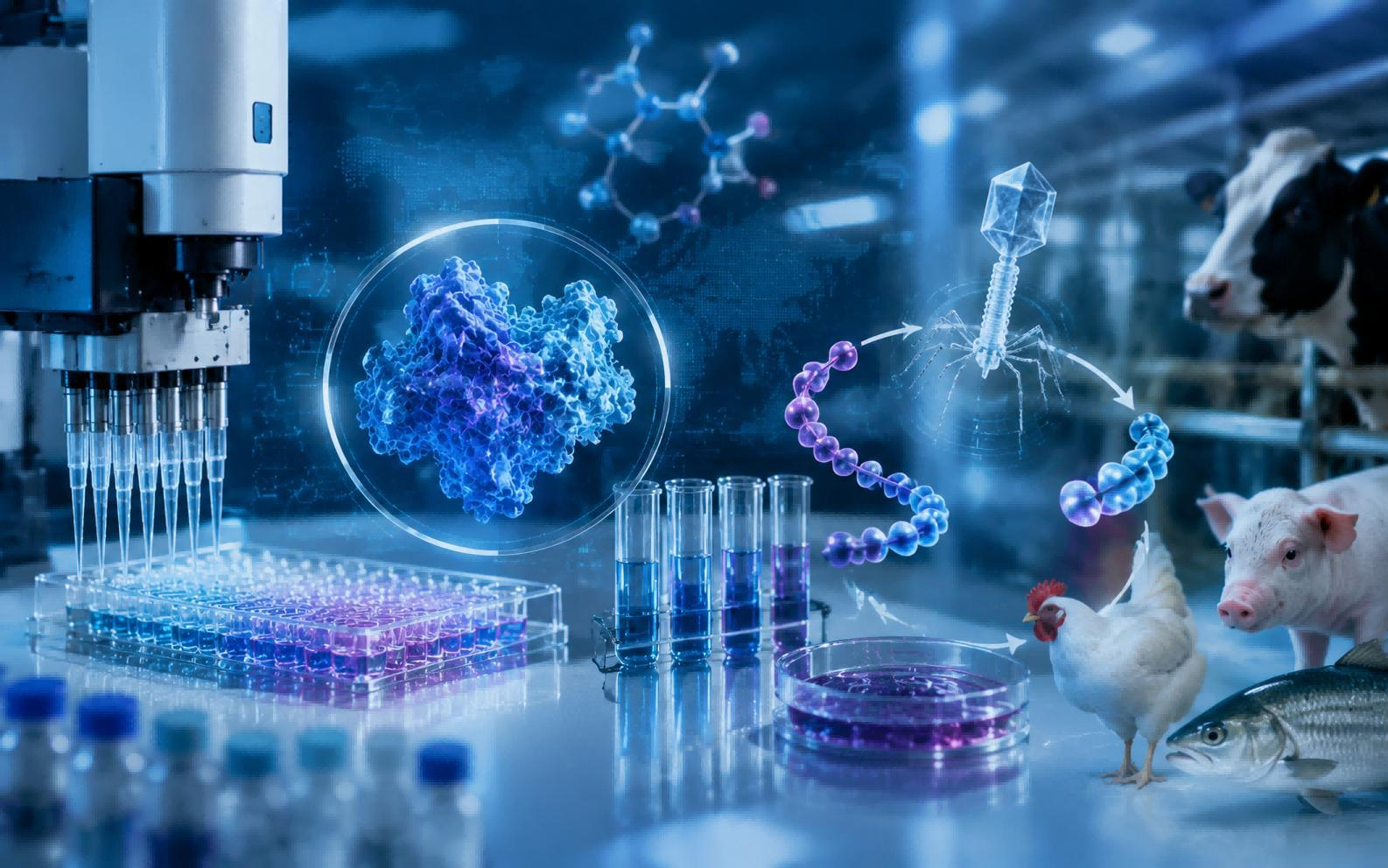
Introduction: A Shift Toward Biologics in Veterinary Drug Discovery
The landscape of animal health is undergoing a significant transformation as biologic therapies gain momentum over traditional small-molecule drugs. In modern veterinary therapeutic protein and peptide discovery services, researchers are increasingly leveraging engineered proteins, peptides, and biologically derived molecules to address complex diseases in livestock, poultry, aquaculture species, and companion animals.
Traditional veterinary drug discovery has long been constrained by high development costs, long timelines, and limited species-specific efficacy. Many compounds that perform well in vitro fail during translational studies due to biological differences between animal species. As a result, next-generation discovery strategies now rely on integrated platforms such as high-throughput screening (HTS), phage display systems, and rational protein engineering to improve efficiency, precision, and success rates.
These technologies collectively enable faster identification of functional biologics, improved target validation, and more reliable preclinical pipelines for veterinary therapeutics.
Therapeutic Protein and Peptide Development in Veterinary Medicine
Therapeutic proteins and peptides are biologically active molecules designed to modulate specific pathways involved in disease. In veterinary medicine, they are increasingly used for immune modulation, infection control, metabolic regulation, and regenerative applications.
The development lifecycle typically begins with target identification, where disease-associated proteins or receptors are selected based on veterinary pathology or comparative genomics. Once targets are defined, candidate biologics are designed through gene synthesis and optimized using expression systems such as Escherichia coli, yeast, insect cells, or mammalian cell lines depending on required folding, glycosylation, and bioactivity.
Following expression, early-stage candidates undergo purification and structural validation, including confirmation of molecular weight, binding activity, and functional stability. This stage is critical for ensuring that only biologically relevant and species-compatible molecules advance into screening pipelines.
Species specificity is a defining requirement in veterinary biologics development. A therapeutic effective in cattle may not translate directly to poultry or aquatic species due to receptor variation, immune system differences, and metabolic diversity. Therefore, modern pipelines emphasize cross-species validation early in the discovery process.
The Screening Engine: High-Throughput Screening (HTS) in Veterinary Drug Discovery
High-throughput screening (HTS) serves as the core engine of modern veterinary therapeutic protein and peptide discovery services, enabling rapid evaluation of thousands of candidate molecules against biological targets.
HTS platforms integrate multiple assay formats to assess binding, activity, and functional response:
· Cell-based assays evaluate biological activity in physiologically relevant systems
· Enzyme activity assays quantify catalytic inhibition or activation
· Molecular binding assays such as SPR (Surface Plasmon Resonance) and ITC (Isothermal Titration Calorimetry) measure binding kinetics and thermodynamics
· Protein–protein interaction assays (Co-IP, FRET/BRET, AlphaScreen) identify complex formation and signaling interactions
· Gene expression screening assesses downstream transcriptional changes
· Compound library screening enables broad exploration of bioactive candidates
To support scalable screening, microarray platforms and immobilization techniques are widely used. Proteins or peptides may be immobilized on nitrocellulose or PVDF membranes, as well as through physical adsorption or covalent chemical coupling. These formats allow parallelized screening of large molecular libraries under controlled conditions.
Additional technologies such as ELISA, mass spectrometry (MS), high-content screening (HCS), and fluorescence resonance energy transfer (FRET) further enhance analytical resolution. Together, these methods allow researchers to identify “hits” with high confidence and rapidly progress them toward lead optimization.
A structured HTS workflow typically includes:
1. Target definition and validation based on veterinary disease relevance
2. Custom assay design tailored to biological mechanism
3. High-throughput screening of candidate libraries
4. Hit confirmation and secondary validation
5. Data analysis and reporting for lead selection
This systematic approach significantly reduces discovery time while improving reproducibility and translational relevance.
The Precision Tool: Phage Display for High-Affinity Binder Discovery
Phage display technology is a cornerstone of modern biologics discovery, particularly for identifying high-affinity peptides and protein binders. It is widely applied in both therapeutic protein engineering and antibody discovery workflows.
The method relies on genetically engineered bacteriophages that display peptide or protein variants on their surface. The central process, known as biopanning, involves iterative affinity selection:
1. A phage library containing up to 10¹⁰ unique sequences is exposed to a target antigen
2. Non-binding phages are removed through stringent washing
3. Specifically bound phages are eluted
4. Selected phages are amplified in bacterial hosts
5. The cycle is repeated to enrich high-affinity binders
Through multiple rounds of selection, phage display enables the evolution of molecules with improved affinity, specificity, and functional performance. Importantly, it can be performed entirely in vitro, eliminating the need for immunization in animal hosts and enabling precise control over selection conditions.
This technology is also adaptable to in vivo screening models, allowing evaluation under physiological conditions. Its versatility makes it suitable for both peptide therapeutics and monoclonal antibody development targeting veterinary disease pathways.
From Discovery to Development: Formulation, Manufacturing, and Quality Control
Once lead candidates are identified, they progress into formulation and manufacturing development. At this stage, stability becomes a key consideration, as therapeutic proteins and peptides must maintain structural integrity under storage and physiological conditions.
Formulation strategies often focus on buffer optimization, aggregation prevention, and enhancement of half-life through chemical modification or carrier systems. Manufacturing processes are designed to ensure scalability while maintaining batch-to-batch consistency.
Quality control (QC) is essential throughout development. Analytical validation includes purity assessment, potency testing, structural confirmation, and stability profiling. Techniques such as chromatography, electrophoresis, and mass spectrometry are commonly used to ensure that final candidates meet preclinical research standards.
These steps collectively ensure that only robust, reproducible, and biologically active candidates advance toward in vivo veterinary testing.
Conclusion & Future Outlook
The integration of high-throughput screening, phage display systems, and advanced protein engineering represents a major advancement in veterinary therapeutic protein and peptide discovery services. Together, these technologies enable faster identification of high-quality biologics, improved target specificity, and more efficient preclinical development pipelines.
Looking forward, veterinary medicine is expected to move toward increasingly personalized and precision-based therapeutic strategies. Peptide-based drugs and engineered proteins may play a central role in addressing emerging challenges such as antimicrobial resistance, zoonotic disease control, and species-specific metabolic disorders.
As discovery platforms continue to evolve, the convergence of computational biology, automated screening systems, and synthetic biology will further accelerate innovation in animal health therapeutics.
For researchers and veterinary scientists seeking deeper technical insight into these platforms and workflows, the following resources provide detailed methodological references.
Resources & Further Reading
· Veterinary Therapeutic Protein and Peptide Development Services
· Phage Display Platform for Veterinary Therapeutic Protein and Peptide Discovery
· High-Throughput Screening for Veterinary Drug Discovery

 English
 Arabic
 French
 Spanish
 Portuguese
 Deutsch
 Turkish
 Dutch
Dutch
 Italiano
 Romaian
 Portuguese (Brazil)
 Greek
Greek